Angel Jewels Precious and Semi Precious Gemstone Jewellery Store
Angel Jewels Gemstone & Jewellery Precious and Semi Precious Gemstone
What are the differences between precious and Precious stones
Precious stones are distinguished by their quality, their rarity and the beauty of their colours. There are only four precious stones: Diamond, sapphire, ruby and emerald. All other stones are therefore called semi-precious stones.
This distinction is also due to their hardness, which translates into scratch resistance. One stone is harder than another if the former can scratch the latter. Only a diamond can scratch another diamond. However, it can still crack in the event of a major shock.
Hardness is measured on the Mohs scale that ranks minerals on a scale of 1 to 10. Diamond (10/10), ruby (9/10), sapphire (9/10) and emerald (7.5-8/10) are considered the hardest.
Nevertheless, all stones remain fragile and require the utmost care
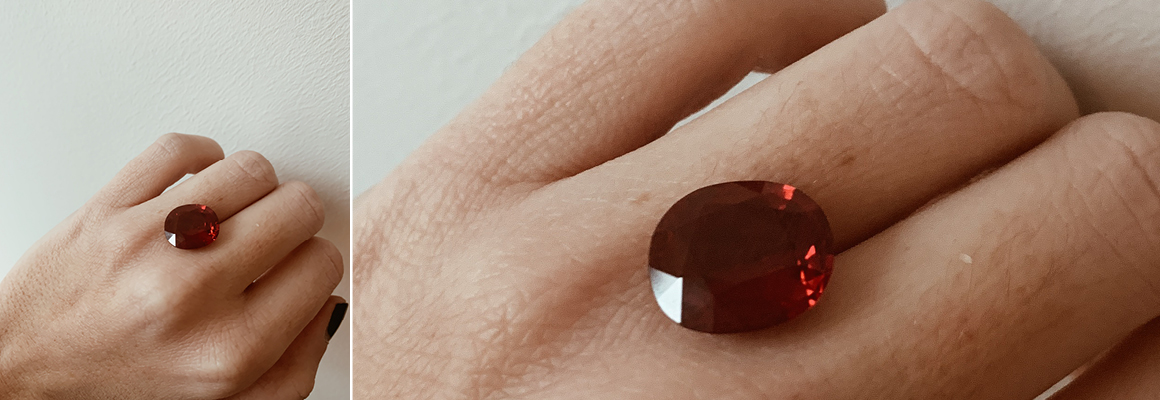
Ruby is distinguished by its red tones, which can go through a gradient from pink to purple, to slightly brown. The most sought-after, and rarest, is undoubtedly the bright red colour. Ruby often has a secondary colour. However, the more pronounced these are (purple or orange) the lower the value of the ruby.
The rubies in greatest demand, for their dense colour, come mainly from Burma and Mozambique which alone account for 60% and 40% respectively of world production. Other countries such as Sri Lanka, Tanzania, Thailand and Madagascar are also renowned for the brilliance and exceptional purity of their rubies.
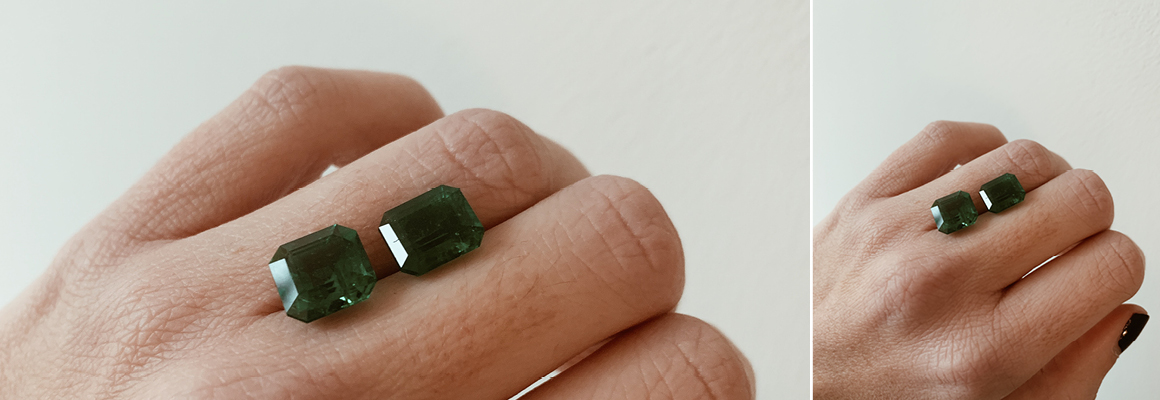
Emerald is green in colour and can vary from pale green to deep green. More sensitive to shocks than other precious stones, it is generally mounted in emerald cut to limit the risks during setting. Emeralds are usually small in size. The larger ones are very rare and can be up to 20 times more valuable than a diamond of the same size. Today, the most beautiful emeralds come from deposits in Colombia, Zambia, Zimbabwe and Brazil.
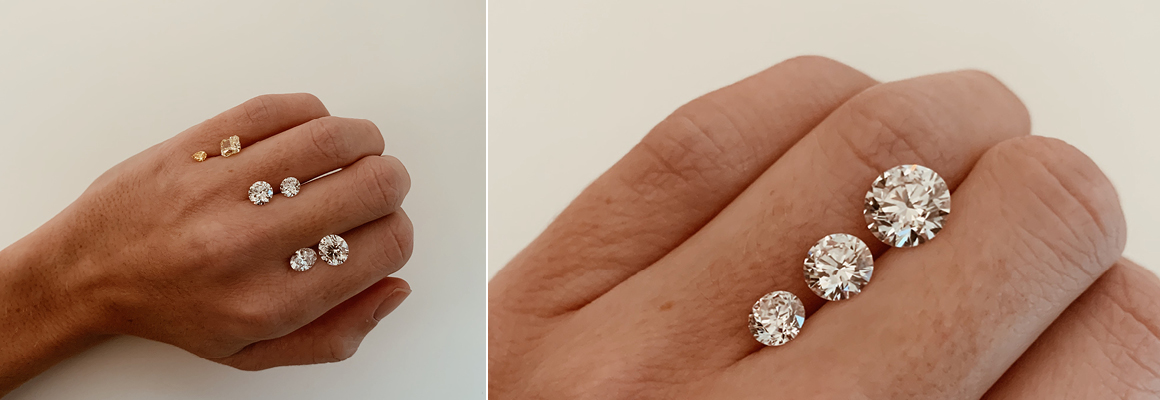
The white diamond is the best known of all. However, it has an incredible palette of colours. There are almost as many shades of white as there are letters in the alphabet (D being the most flawless and Z the richest in yellow highlights). In addition to its white shades, the diamond has many more or less unusual shades.
The rarest is the red diamond, of which there are very few. Blue, green, pink and orange diamonds are also rare. Then there are the yellow and colourless (so-called white) diamonds. These wonderful stones can be found in mines in India, South Africa, Canada, Russia and Brazil.
The 4Cs are the international standards used to accurately assess the quality and value of the precious gem. These criteria are Cut, Colour, Clarity and Carat (weight).
On the one hand, the term "precious stones" does not necessarily reflect value, as they can sometimes be less expensive than some semi-precious stones.
Thus, a tsavorite green garnet may be more expensive than a medium-quality sapphire. Many semi-precious stones are rarer than precious stones.
The term "semi-precious stones" does not mean that they are less beautiful than precious stones. The best known of these are amethyst, topaz, peridot, citrine, aquamarine or green tourmaline. The range of semi-precious stones offers an infinite palette of colours and shades that is much wider than all the colours of the precious stones put together. It is always better to use a beautiful aquamarine rather than a poor-quality sapphire.
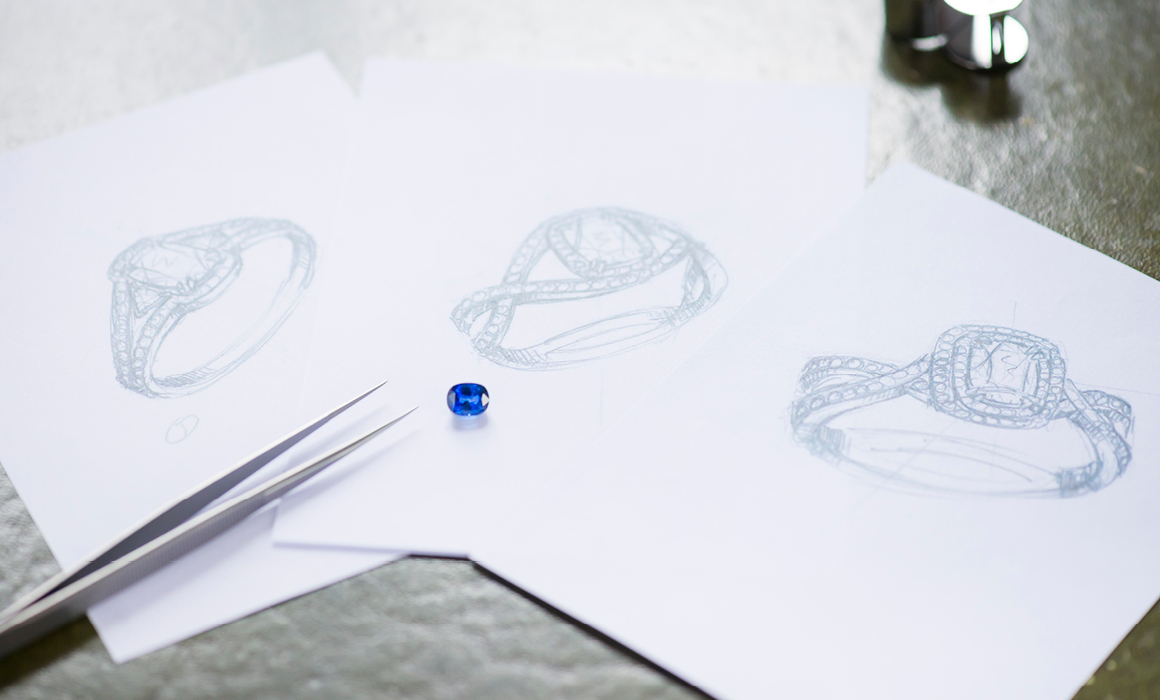 So, how should one choose?
Professionals have certainly classified gems for many centuries. Several criteria are taken into account such as hardness, colour, size, purity and rarity. However, the perceived beauty of a stone is very personal and unique to each individual. The choice of stone must be made according to one's own sensitivity to what it emanates. After all, what better criterion than the choice of the heart? Because what should shine most, when the stone is revealed, are your eyes...
Semi precious stones
Every other gemstone that isn’t one of those four is considered to be semi precious. The list goes on and on, but some of the more common ones are: alexandrite, agate, amethyst, aquamarine, garnet, lapis lazuli, moonstone, opal, pearl, peridot, rose quartz, spinel, tanzanite, tourmaline, turquoise and zircon.
This separation between precious and semi precious has no real scientific backing. For example, emerald is a variety of a beryl, so are aquamarines. Emerald is precious while aquamarine is semi precious. When this categorization came about, it was mainly due to the value and rarity differences between the 4 precious gemstones and the rest. Today some semi precious gemstones can be worth much more than a precious stone. As an example, many natural pearls garner huge prices, often worth more than a low quality precious diamond, ruby, emerald or sapphire. Spinels are another example. Additionally, many semi precious stones can be more rare than some of the precious. Demantoid garnets or tsavorite garnets and many other semi precious gemstones are hard to find, harder to mine and produced in much lower qualities than the precious gemstones.
When purchasing a gemstone, we wouldn’t suggest getting too caught up on if the stone is precious versus semi precious. All gemstones are precious, in the sense that if they provide meaning and value to you in a piece of jewelry, they are special! Bare in mind that colors are subjective and a piece of jewelry is emotional.

Comments
Post a Comment